
Monarch Mini V2
A cordless, USB-C rechargeable water mist device small enough for a bag. Arwic designed the circuit board, the firmware, the Bluetooth control page and the housing. The Mini V2 stands on its own glass vial and takes up 18% of the space of the first version.
Status: production boards delivered and running the full firmware, November 2026.
3 weeks
from design brief to working hardware
The product
A 30 ml glass vial screws into the device. A cotton wick feeds a 16 mm mesh disc that vibrates at 108 kHz and turns water into a cold mist. One button steps through three modes: constant, blast and puffs. A lithium cell charges over USB-C.
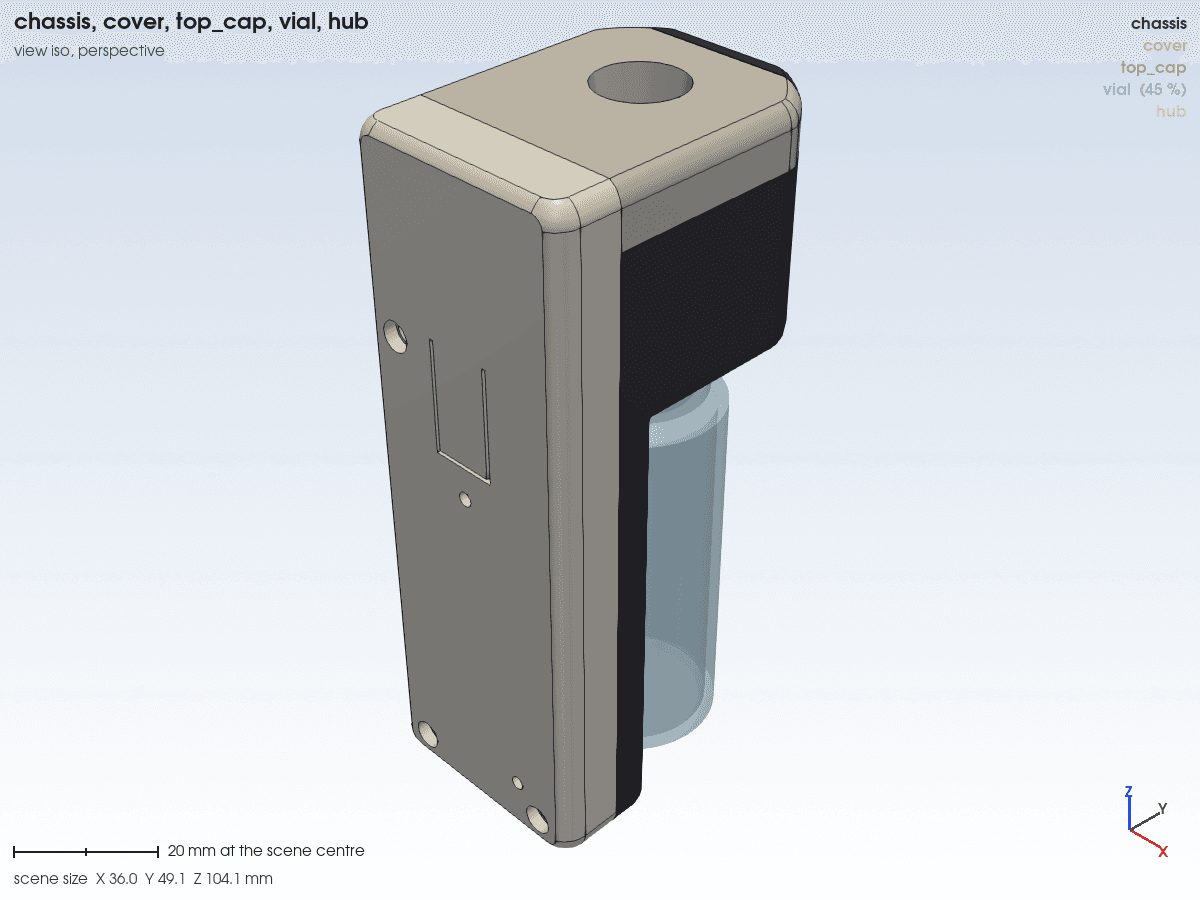
Mini V2 standing on its vial.
The board
A 4-layer board of 30 × 98 mm with every part on one side: an ESP32-C3 wireless module, a charger with power-path control, cell protection, a 3.3 V regulator, mist current sensing and USB protection. 76 parts, 897 track segments and 197 vias, with zero electrical-rule errors and zero design-rule errors.
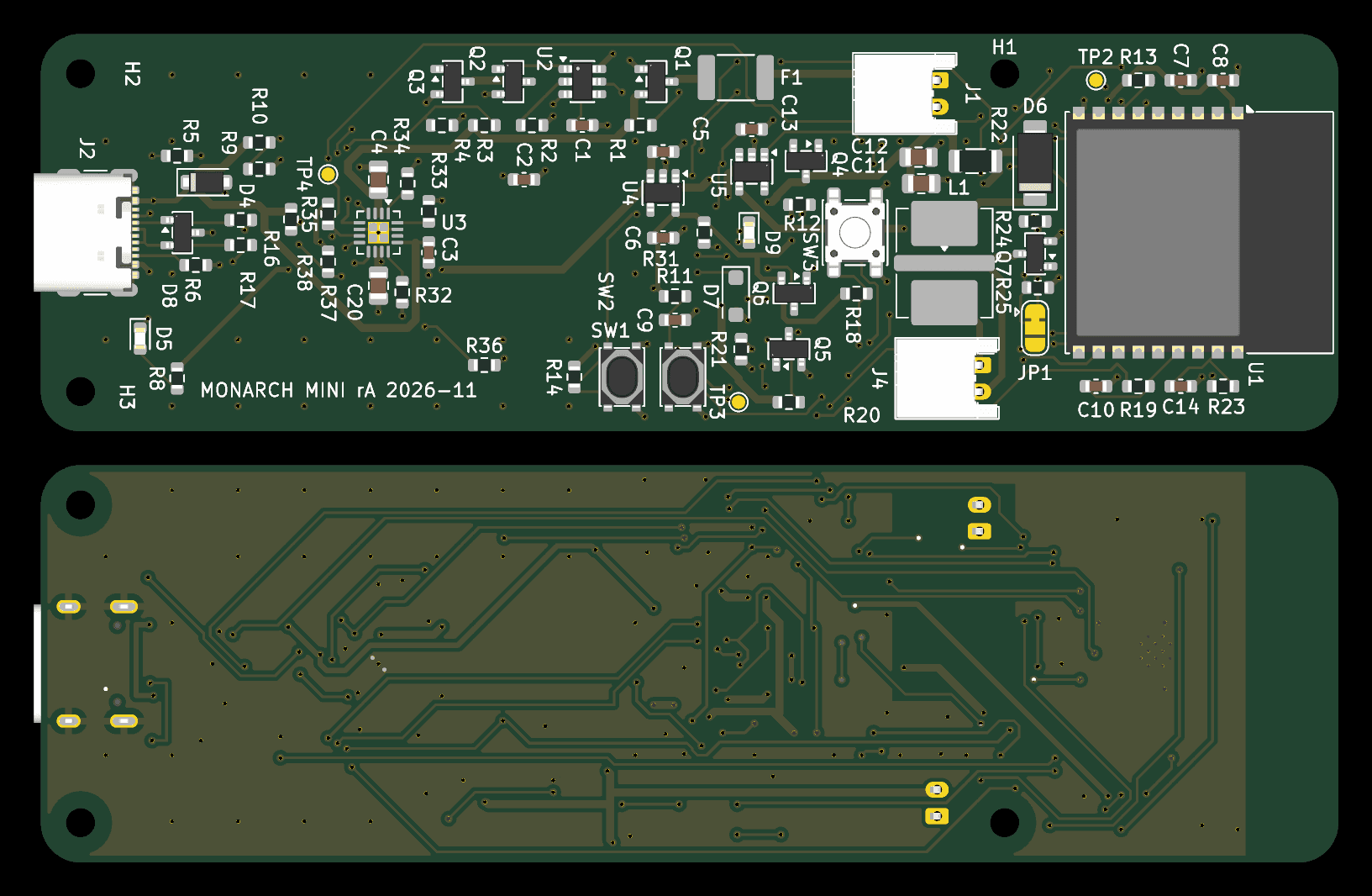
The board, top and bottom.
Checked against the factory before ordering
The board went through five assembly checks against the factory's own part data in one day. The first four runs caught wrong part rotations and offsets, and each was corrected. The fifth passed with no failures. Swapping 15 parts for the factory's stock parts cut the assembly estimate for five boards from about $161 to about $115.
The housing
Four printed parts: hub, chassis, cover and top cap, held by four M2 screws and no glue. The assembled device is 36 × 49 × 103 mm and stands on its vial, full or empty. A full set prints in under 3 hours and weighs 55 g. The earlier housing wrapped the vial and left only windows onto it. V2 leaves the whole glass bare, so it is easy to grip and turn.
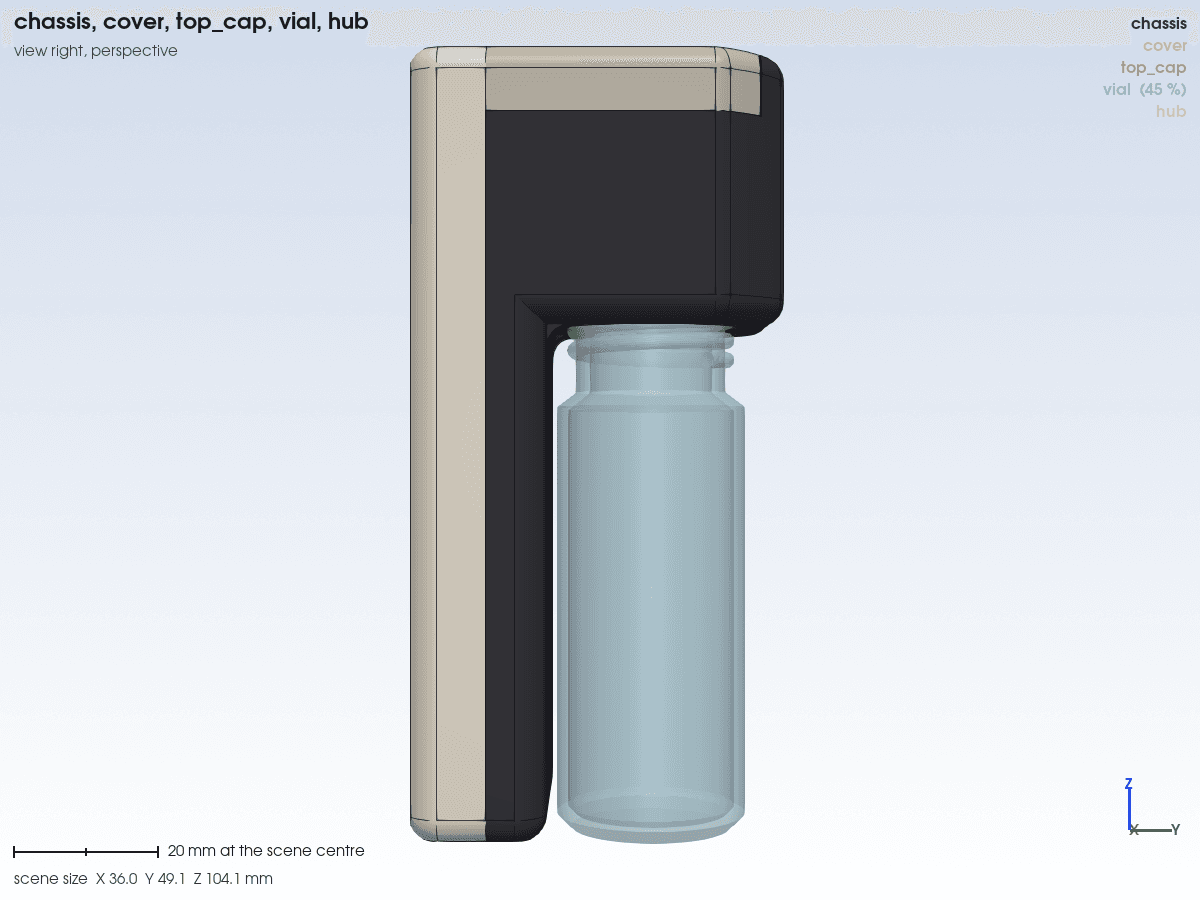
Side view.
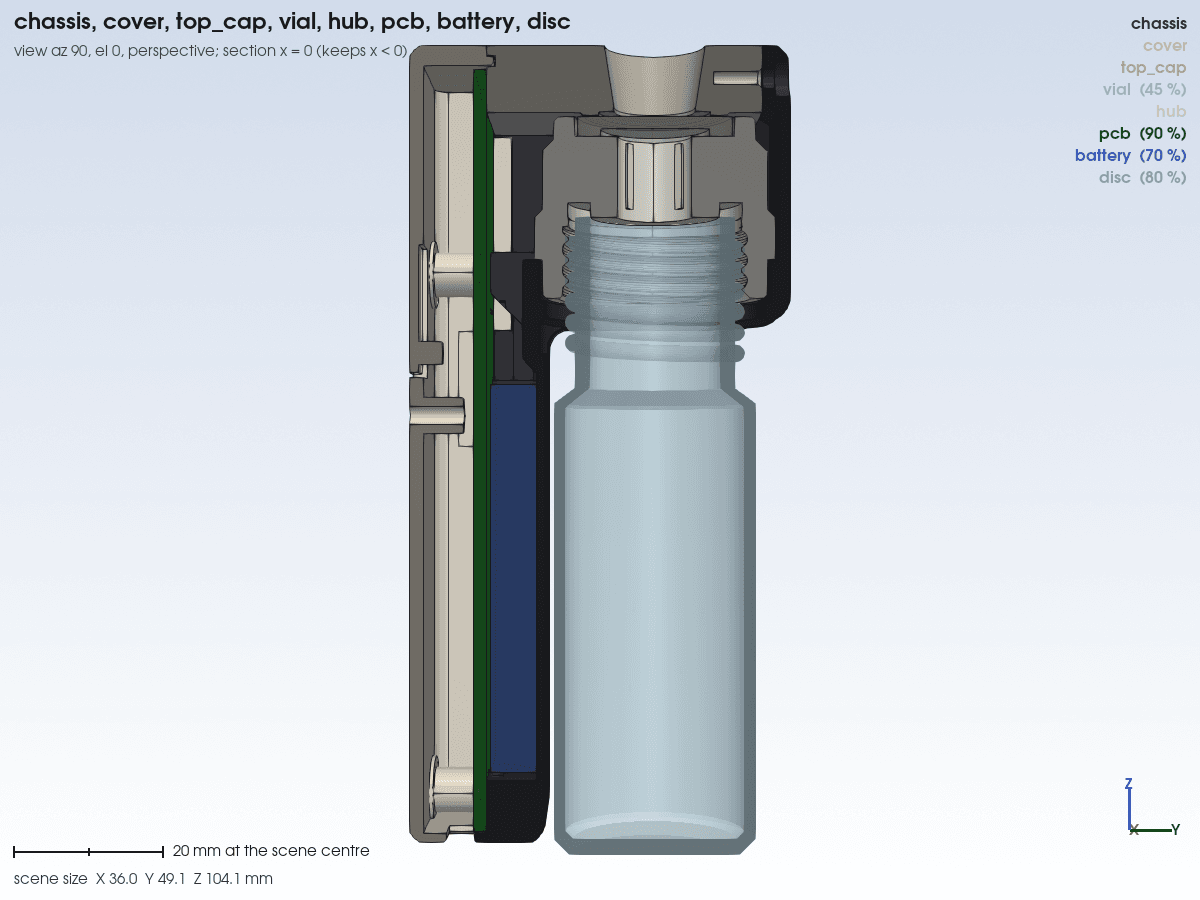
Section through the board, cell and vial.
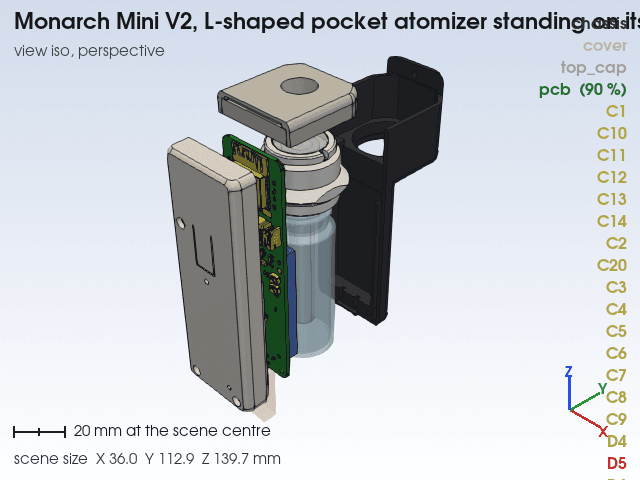
The four printed parts and the board.
What the first Mini taught
The first Mini housing was printed and tested. Its cap hooks broke and its cover standoffs tore out. Both were fixed in the next two revisions, with a screwed cap and reinforced standoffs, and the screwed cap carried into V2.
Firmware and phone control
The firmware is written in C on ESP-IDF. The device is controlled over Bluetooth from a web page in Chrome or Edge, with no app to install, and it takes firmware updates the same way. On the development board a 648 KB update took 62 seconds, and the firmware detects a dry disc.
Timeline
The board and housing were designed in one weekend, from brief to factory-ready files. Board production took two weeks. Four days after the boards arrived, the full firmware was running on them with every feature working.
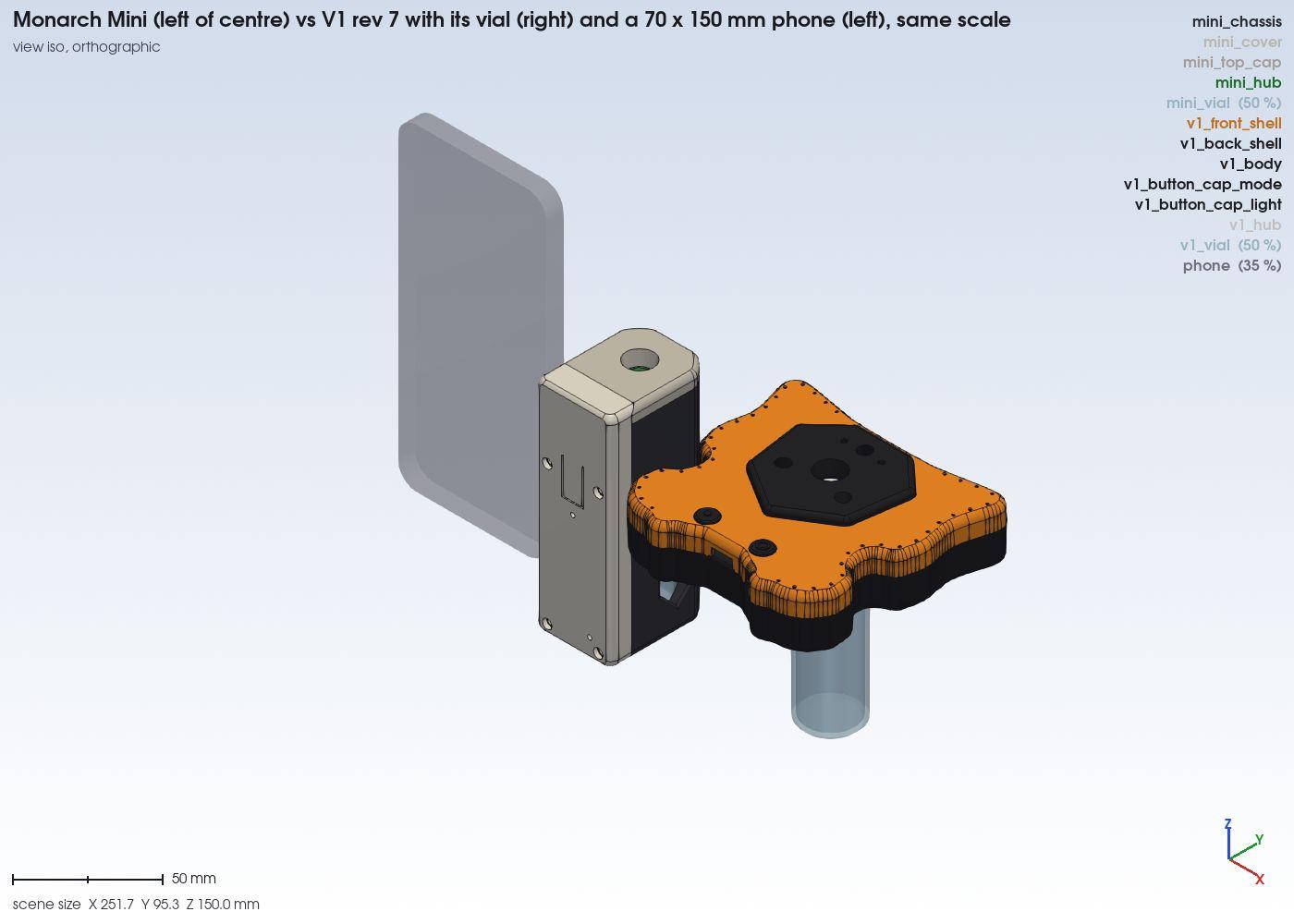
The first Mini housing beside the first version and a phone, same scale.
Where it came from
The Mini V2 is the third housing and the second board in the line. The first version measured 103.5 × 95.3 × 102 mm. The Mini fits the same function into 18% of that volume.