
IR Light Gun
A camera-based light gun for modern flat screens. Arwic designed the circuit boards, wrote the firmware, and designed and printed the housing. It connects as a standard USB mouse, so it works with Windows and RetroPie without drivers.
Status: working on the bench. Calibration and play testing are in progress.
3 weeks
from plan to working hardware
The problem
Classic light guns depend on how tube televisions draw the picture, so they do not work on flat screens. A modern replacement has to find the screen with a camera, work out where the barrel points, and report it to the game fast enough that the delay is not felt.
Electronics
One manufactured panel carries the whole bench system as break-away boards: the main board, four button boards, the emitter hub and four infrared emitter pods for the corners of the screen. The design was produced with Arwic's AI board-design toolchain and passed electrical and design-rule checks before it was ordered.
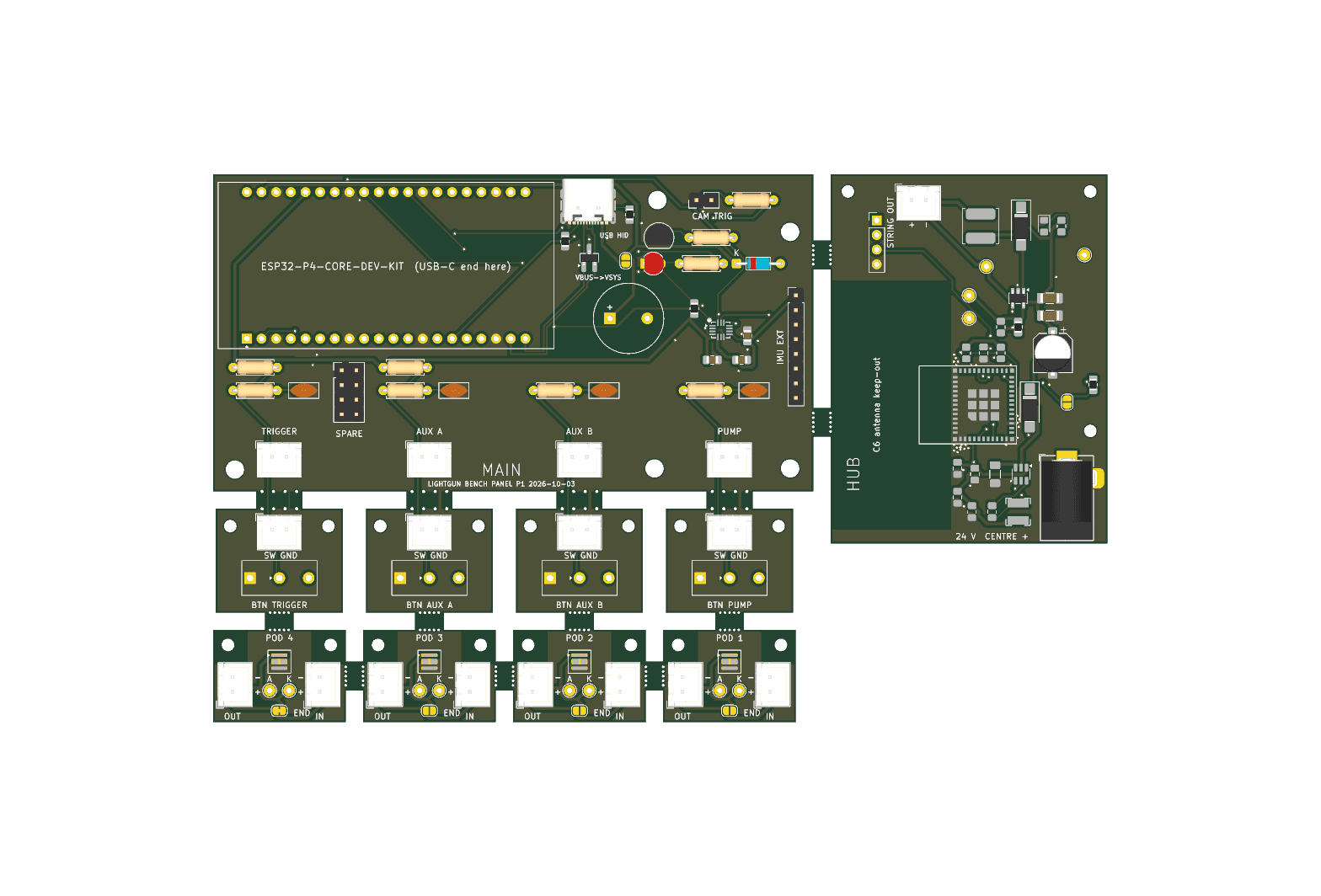
The bench panel: main board, hub, four button boards and four emitter pods, made as one break-away panel.
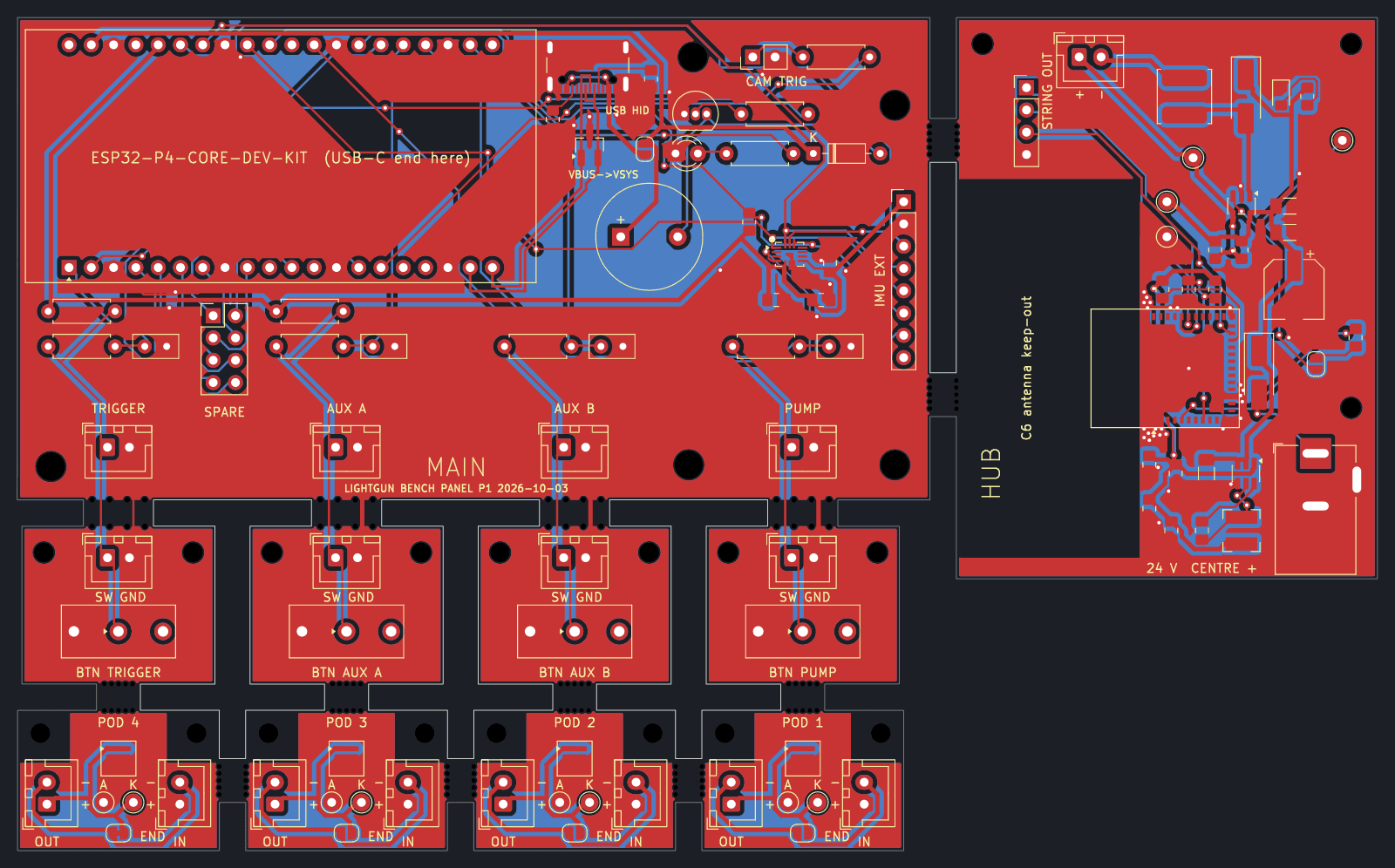
Routed copper, front side.
Firmware
The gun runs on an ESP32-P4 with a global-shutter camera and a gyroscope. Measured on the bench: 100 camera frames per second with 0 of 9,346 frames dropped, 1,603 motion-sensor readings per second with no gaps, 1.46 ms of image processing per frame, and about 980 position reports per second to the computer. Firmware updates install over the same USB cable in about 9 seconds and roll back automatically if the new version fails.
Housing
The gun is seven printed parts: a two-piece shell, a trigger module, button modules and a camera mount, plus a hub box and pod clamps for the screen. Each part was modelled around the real boards, checked for collisions, printed and test-fitted. 16 logged prints took the shell from first fit to the current revision.
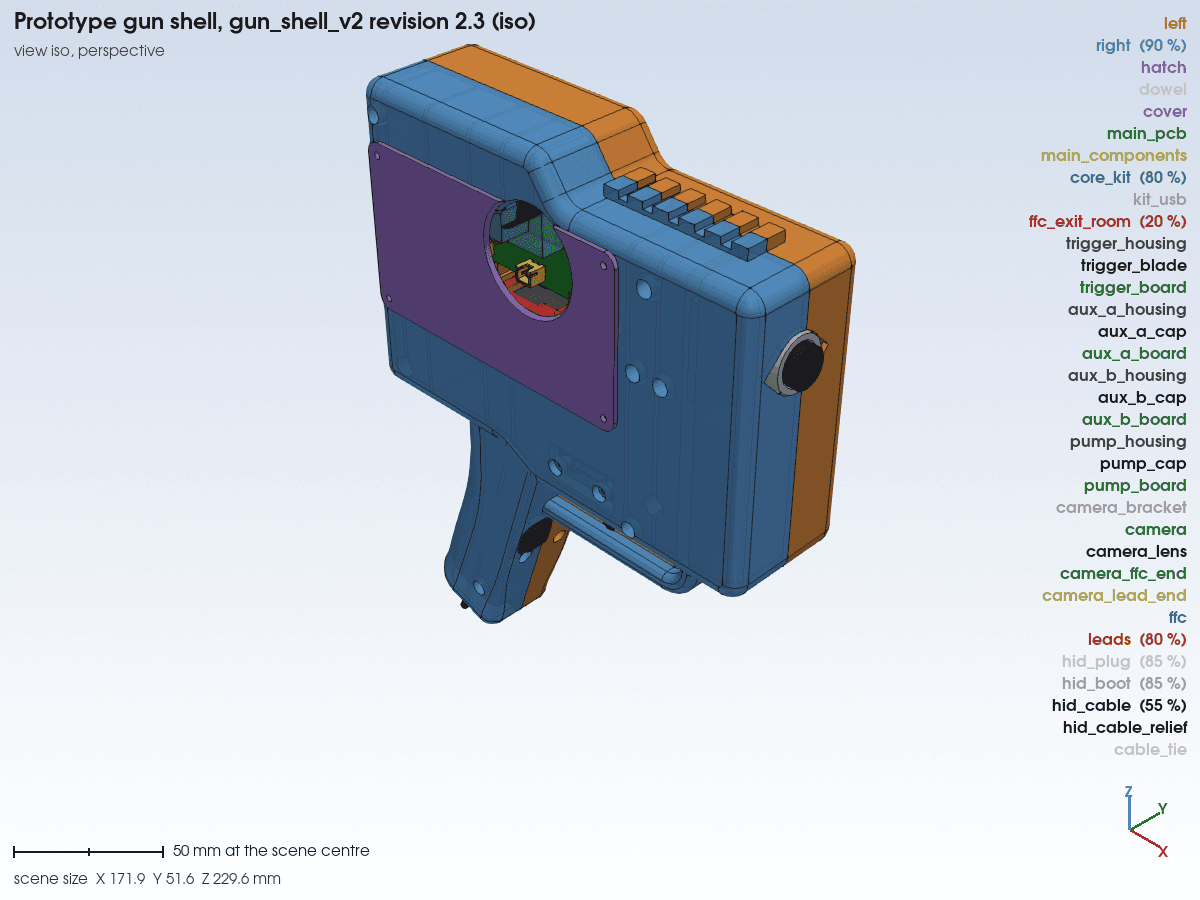
Housing revision 2.3 with the boards, camera and buttons modelled inside.
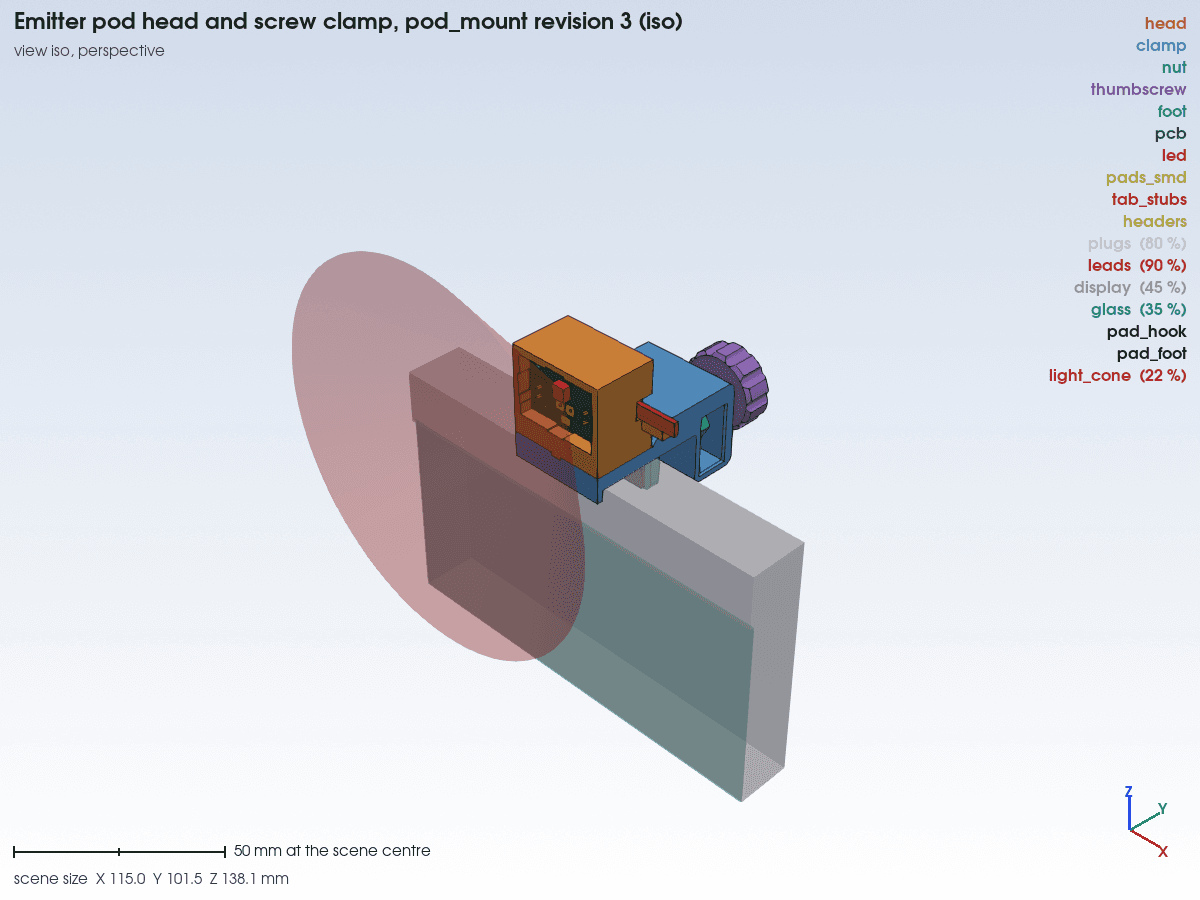
Emitter pod and clamp on a screen edge, with the infrared light cone drawn.
What it shows
Boards, firmware, mechanical parts, PC setup tools and a user manual, produced together in about three weeks: one weekend of design, two weeks of board production, and four days to full firmware for every feature on the delivered boards. The same process applies to a sensor, a controller, a tester or a consumer device.
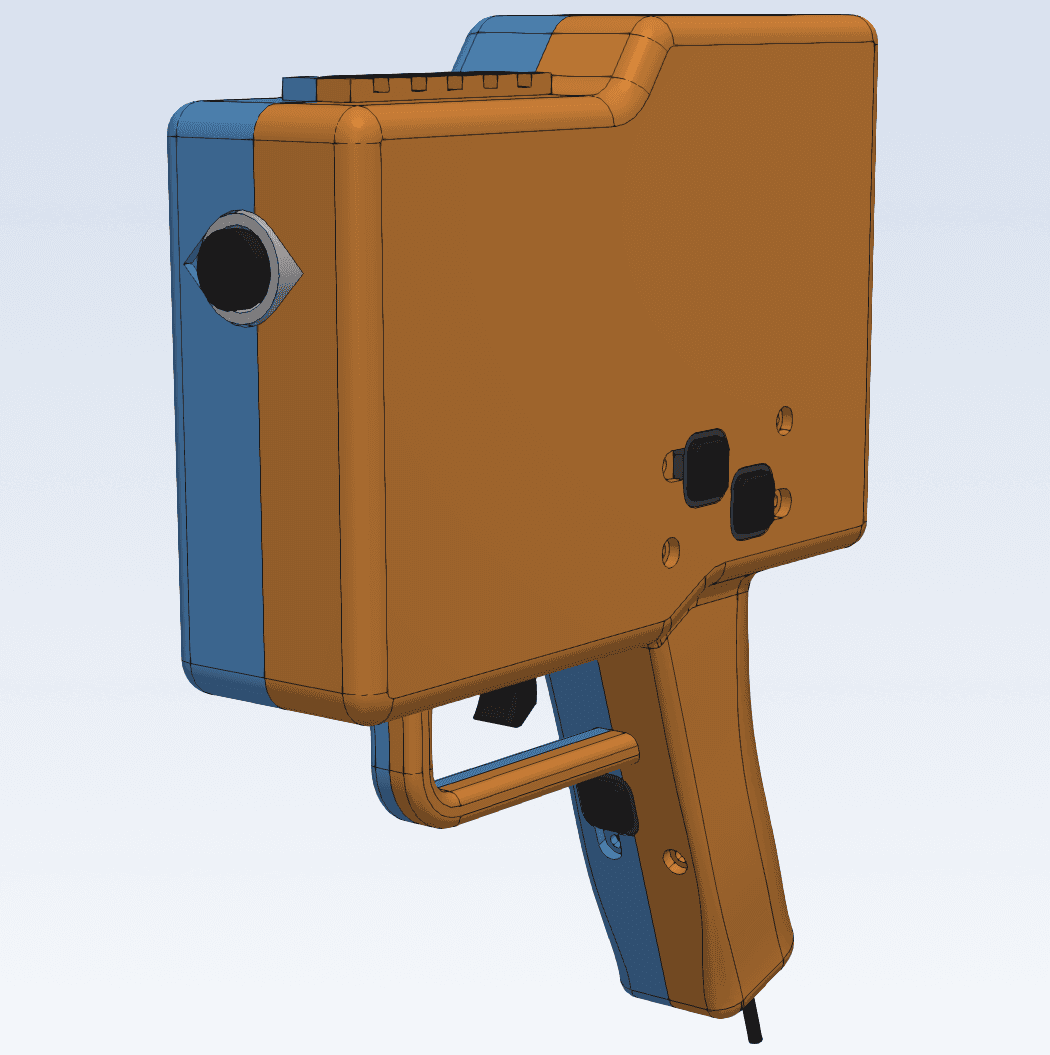
The assembled gun.
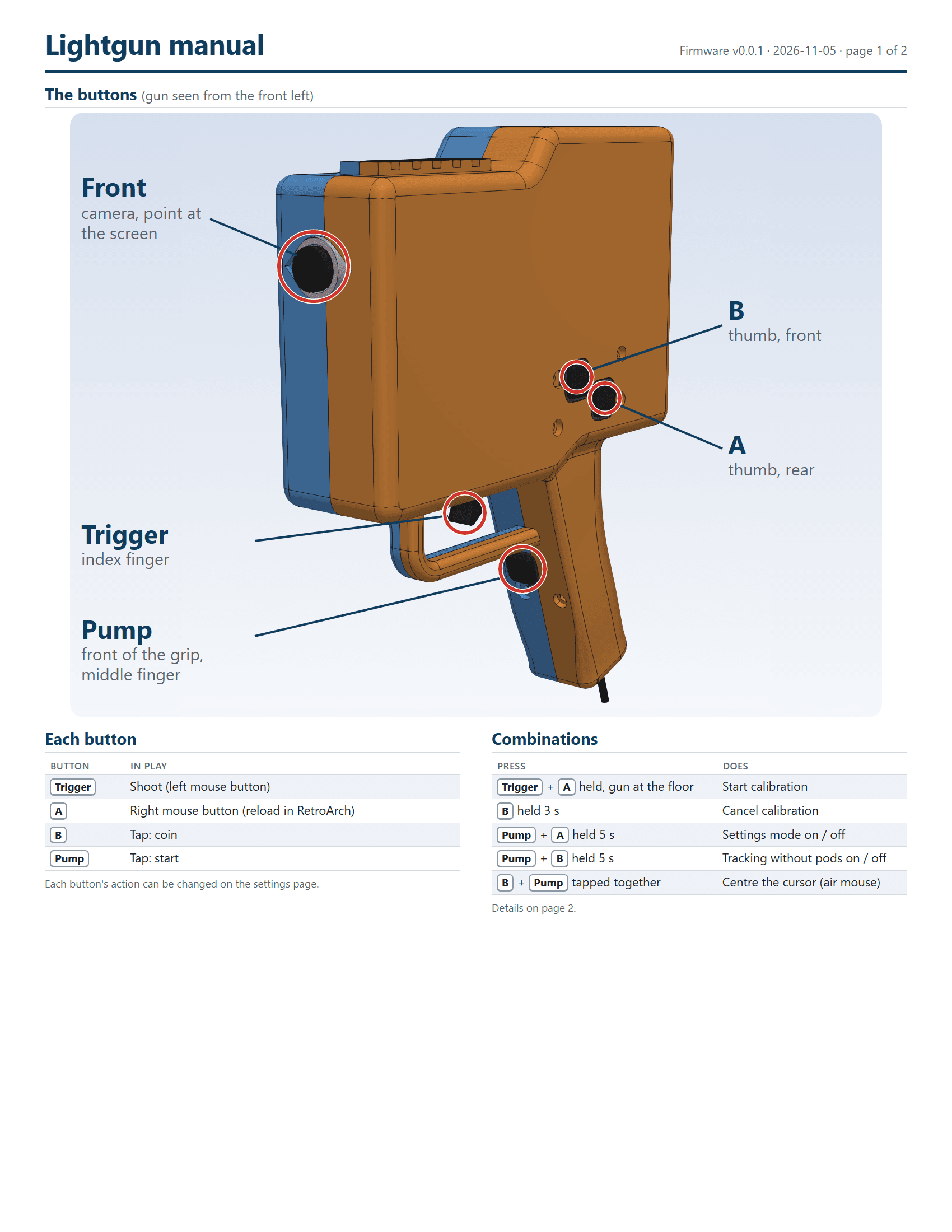
Page one of the user manual.